The mount path

Follow the five steps in order. Each one depends on the choice you made above it.

Before you start

Gather three facts first.

You can plan the whole job once you know these. Everything after is just doing it carefully.

  • Your TV's weight and VESA pattern. Both are in the manual or on the manufacturer's spec page.
  • What your wall is made of. Masonry, timber studs, or hollow plasterboard — this drives everything.
  • Where you sit. The height is set by your seated eye line, not by the furniture below it.
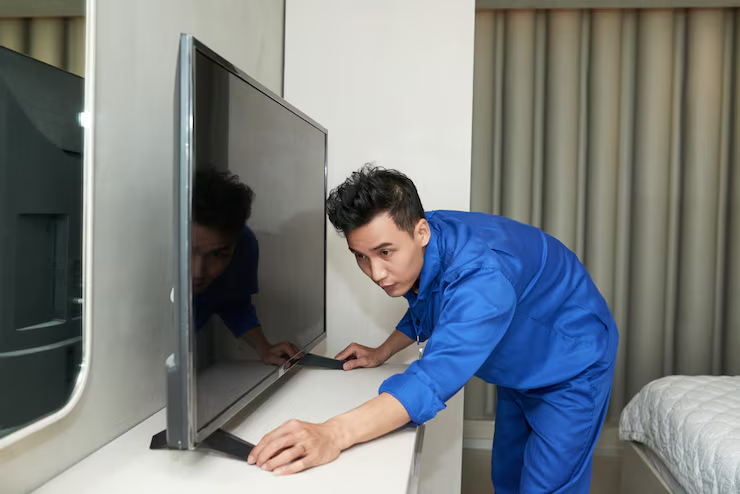
A person carefully positioning a flat-screen TV against a wall before fixing it
1

Choose the mount

Match the bracket to how you actually watch.

A fixed bracket sits flush and disappears into the wall. A tilting bracket angles down for a TV placed above eye level. A full-motion arm pulls out and swivels for rooms you watch from more than one seat. Decide the movement you need before anything else.
2

Read the wall

The wall decides the fixings, not the other way around.

Solid masonry, timber studs behind plasterboard, and hollow drywall each need a different anchor. Tap to find studs, use a detector to confirm, and never trust a plasterboard plug to hold a heavy screen on its own.

3

Set the height

Centre the screen on your seated eye line.

In most living rooms the middle of the screen lands roughly 105–115 cm from the floor. Check the VESA hole pattern and the screen weight against the bracket rating before you drill a single hole.

4

Route the cables

Hide the wires without hiding a fire risk.

Surface trunking is tidy and reversible. In-wall routing looks seamless but mains cable behind plasterboard must follow local wiring rules — run only low-voltage HDMI through the wall unless an electrician signs off the power.

5

Verify it holds

Level it, load it, and test before you trust it.

Check the bracket is level, confirm every fixing is torqued into solid material, and give the mounted TV a firm, even tug. If anything flexes or the wall is uncertain, stop and bring in a professional installer.

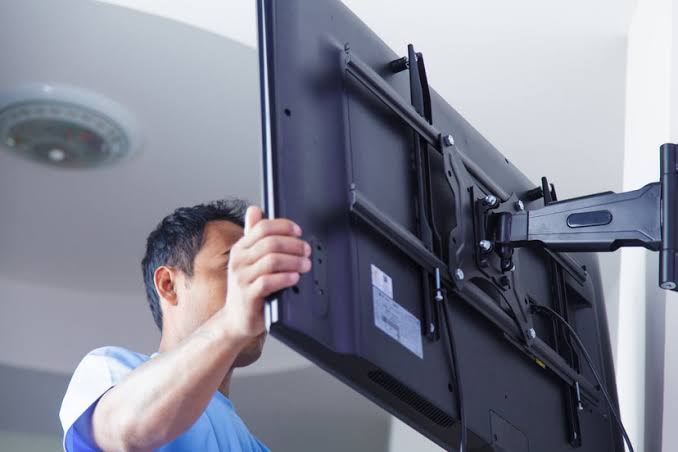
Installer checking the bracket arms and VESA fixing points on the back of a mounted TV

Keep it tidy

A quick pre-drill checklist.

  • Bracket weight rating comfortably exceeds the TV weight.
  • VESA range on the bracket includes your TV's pattern.
  • Fixings suit the wall you actually have, not the one you assumed.
  • Stud or pipe positions marked and double-checked.
  • Spirit level or laser ready to confirm it sits straight.
  • A second pair of hands for lifting a large screen.
Now read the safety brief